
Michigan Governor Proposes Significant Tax Increase on Online Casinos
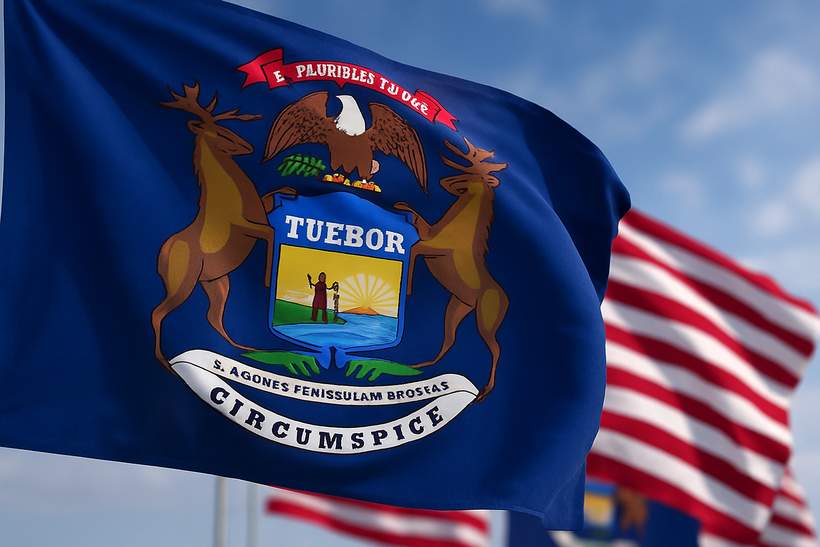
Governor Whitmer Introduces Plan to Raise Online Casino Taxes
This week, Michigan Governor Gretchen Whitmer unveiled a proposal to increase the online casino tax rate to 36%, an 8% rise over the current top rate. This change is part of the state’s Fiscal Year 2027 budget plan and aims to generate additional revenue from the rapidly growing online gambling market.
Details of the Proposed Tax and Surcharge
Alongside the tax increase on online casinos, the proposal introduces a new surcharge on mobile sports betting wagers, following a similar approach adopted in neighboring Illinois. Under this plan, operators would be required to pay 25 cents on each of the first 20 million bets, and 50 cents on every wager beyond that point. This per-wager fee is expected to raise approximately $38.8 million for Michigan.
Current Tax System for Michigan Online Gambling Operators
At present, online gaming operators in Michigan face a progressive tax structure based on their adjusted gross revenue (AGR). The rates currently range from 20% to 28%, with the lowest rate applied to the first $4 million in AGR. The tax rate increases by 2% steps at $8 million, $10 million, and $12 million thresholds, reaching a maximum of 28% for revenues exceeding $12 million.
Last year, only three operators—FanDuel, BetMGM, and DraftKings—exceeded the $12 million threshold to be taxed at 28%. However, some mid-sized operators like BetRivers have started to consistently surpass this threshold beginning in 2025.
Impact on Promotional Credit Deductions
The proposed budget also removes the ability for nearly all Michigan iGaming operators to deduct promotional credits from gross revenue starting in 2027. This change would come in the sixth year of operations for most license holders. Currently, original licensees can deduct up to 4% of promotional credits this year, down from 6% in 2025 and 10% during the initial years from 2021 through 2024.
Learning from Illinois’ Experience with Gambling Taxes
The proposal has drawn attention due to the negative impact seen in Illinois after introducing a similar wagering surcharge. Illinois experienced significant declines in betting volume, with monthly handle dropping nearly 25% in December and more than 15% in prior months after the surcharge was implemented.
In contrast, Michigan’s sports betting handle remained mostly steady in 2025, with wagers totaling $5.54 billion, showing only a slight 0.6% increase from the previous year. Illinois, despite its declines, recorded a stronger growth of 11.6% year-over-year to $15.65 billion.
Potential Outcomes for Michigan’s Gambling Market
Michigan’s operators currently pay one of the lowest state tax rates on AGR in the country, at 8.4%. While the proposed tax increase may result in some decrease in betting activity, it is unlikely to cause as sharp a decline in revenue as that observed in Illinois. The state’s relatively low baseline tax rate may help buffer against the negative effects of higher taxes on both operators and bettors.
